2026-09-28 ·
Checking for Mold After Orlando's Summer Thunderstorms
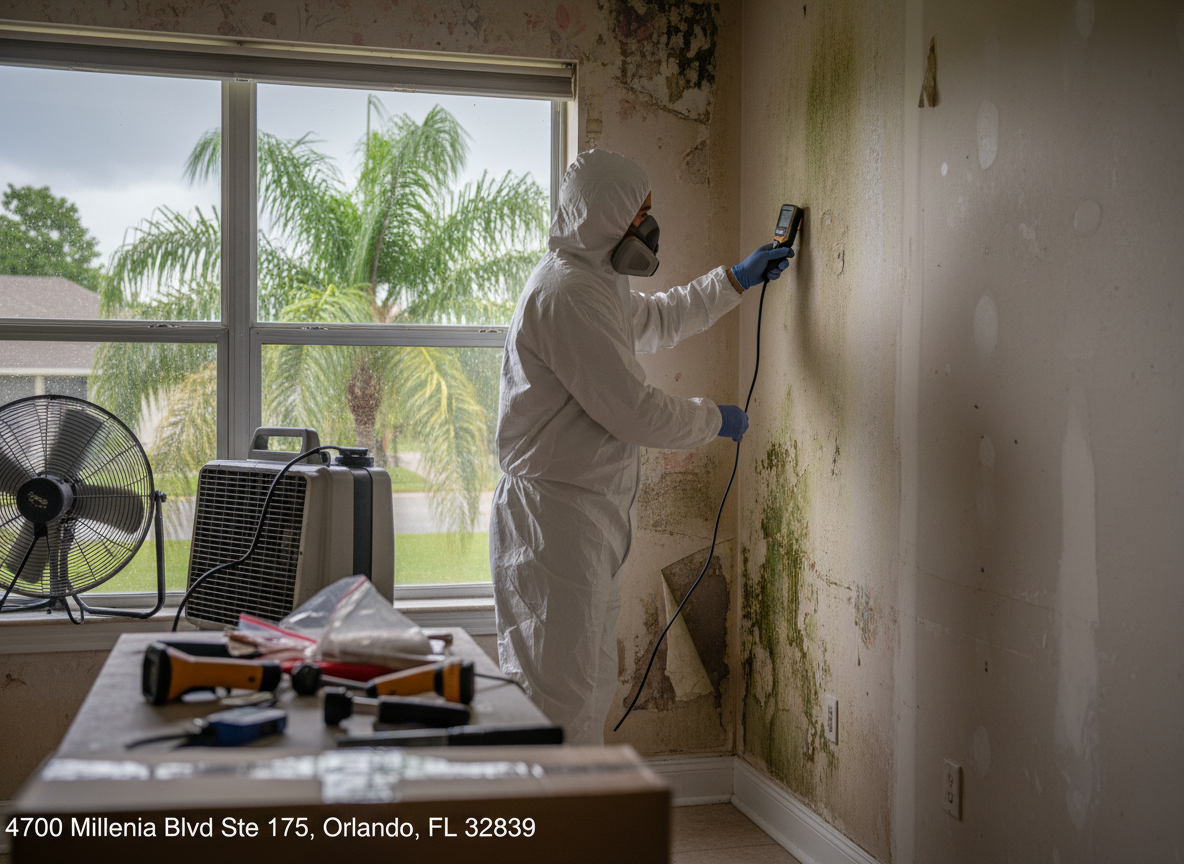
After Orlando's summer thunderstorms, inspect for mold within 24-48 hours in moisture-prone spots like attics and basements around the 4700 Millenia Blvd area. Heavy afternoon rains often push water under rooflines and into wall cavities of homes built in the 1980s and 1990s that dominate nearby neighborhoods. High humidity lingers for days afterward, allowing spores to settle on damp drywall or insulation before visible signs appear.
Common Entry Points After Storms
Thunderstorms in Orange County drop 1-3 inches of rain in under an hour, overwhelming gutters and flashing on single-story ranch homes common near Millenia. Water seeps at roof valleys or around skylights, then travels down into ceiling joists. Check soffits and exterior trim for peeling paint that signals trapped moisture behind the surface. In crawl spaces under older slabs, saturated soil keeps vapor levels elevated long after skies clear.
Homeowners in the 32839 zip often find growth along HVAC ducts where condensation mixes with storm-driven humidity. Run the system on fan-only for 20 minutes and feel for damp registers. Pay attention to bathrooms and laundry rooms where exhaust fans may not clear the extra load from outdoor moisture. These patterns repeat yearly because of the flat terrain that slows drainage around foundations.
Step-by-Step Inspection Process
Begin at the attic access and shine a flashlight along rafters for dark streaks or cottony patches on wood. Use a moisture meter on drywall near windows to read above 15 percent, which indicates risk after recent downpours. Move to the garage and check the shared wall with living space for musty odors that intensify in the evening when temperatures drop. Document every location with photos and notes on size and color before opening walls.
Next examine baseboards in bedrooms on the north side of the house, where prevailing winds drive rain hardest during summer storms. Lift carpet edges in corners to feel for spongy subfloors. If readings stay elevated after 72 hours of drying with fans and dehumidifiers set to 50 percent, professional assessment becomes necessary. This sequence prevents missing hidden colonies that form behind furniture or in closets.
When to Call for Mold Inspection
Persistent odors or meter readings above 20 percent after three days of drying point to colonies that need containment. In homes near 4700 Millenia Blvd, this often occurs in bathrooms added during 1990s renovations where original vents were never upgraded. A targeted inspection maps the full extent without unnecessary demolition. Early detection keeps affected areas under 10 square feet in most cases.
Link inspection findings directly to removal plans when growth reaches HVAC registers or spans multiple rooms. Local weather records show July and August bring the highest frequency of these events, so schedule checks the morning after any storm that drops over an inch. This timing matches how quickly spores activate in 80-plus degree heat combined with 70 percent humidity.
Related Resources for Deeper Checks
Review Common Hidden Mold Spots in Orlando Crawl Spaces to understand how storm runoff affects pier-and-beam foundations typical in the region. Pair that with What Influences Mold Removal Pricing in Orlando Neighborhoods for realistic cost ranges based on square footage and access difficulty. These guides reflect actual conditions faced by crews working daily in 32839 and adjacent zip codes.